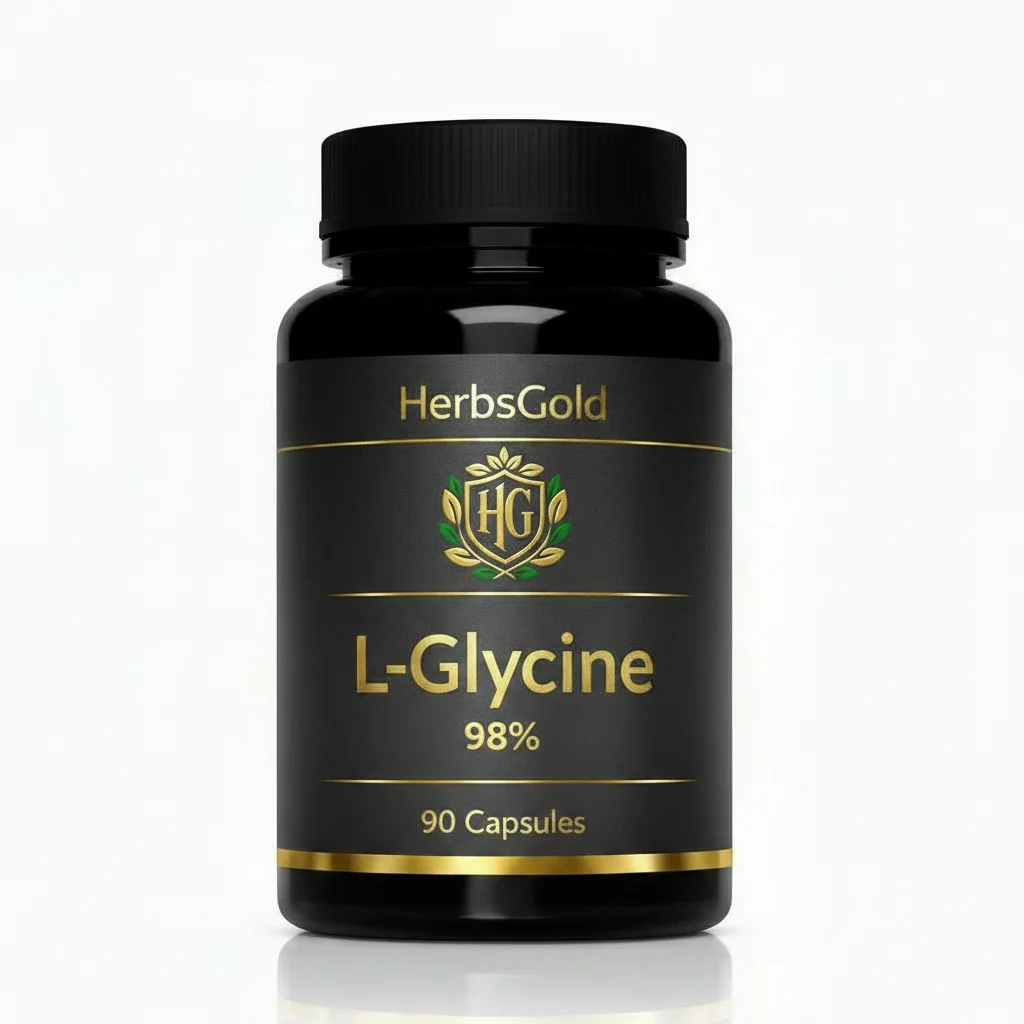
L-glycine: purity is the second number after the dose
With amino acids the dose is easy to see and the purity is rarely declared. That second figure says how much of the stated weight is the amino acid itself.
September 1, 2026
Amino acids are almost always sold with a stated dose in milligrams or grams. Far less often does a purity percentage stand beside that dose.
What purity counts
The powder in the capsule is not a hundred per cent glycine. The remainder is process residue, moisture and excipients.
The purity percentage says how much of the stated weight is the amino acid itself. At 98% and a 2000 mg dose, that is roughly 1960 mg of glycine.
The figures
Essentials L-Glycine contains 2000 mg of L-glycine per daily dose of 4 capsules, at 98% purity.
Glycine doses vary considerably between products, and purity is rarely stated at all.
Why purity is usually missing
It is not a mandatory label element. Regulation (EU) 1169/2011 requires quantities, not a raw-material specification.
A declared purity is therefore voluntary information — which is what makes it useful: a manufacturer who publishes it gives a figure that can be checked against the batch certificate of analysis.
What to look for on a label
- the dose in milligrams or grams for the recommended daily intake
- how many capsules make up that dose
- the purity percentage, if stated
- the form — L-glycine, not a blend with other amino acids
If purity is missing, the dose remains true, but how much of it is the amino acid is unknown.
What purity does not say
Purity describes a raw material. It is not a statement of effect — food supplements do not treat or prevent disease; they complement a varied diet rather than replacing it.