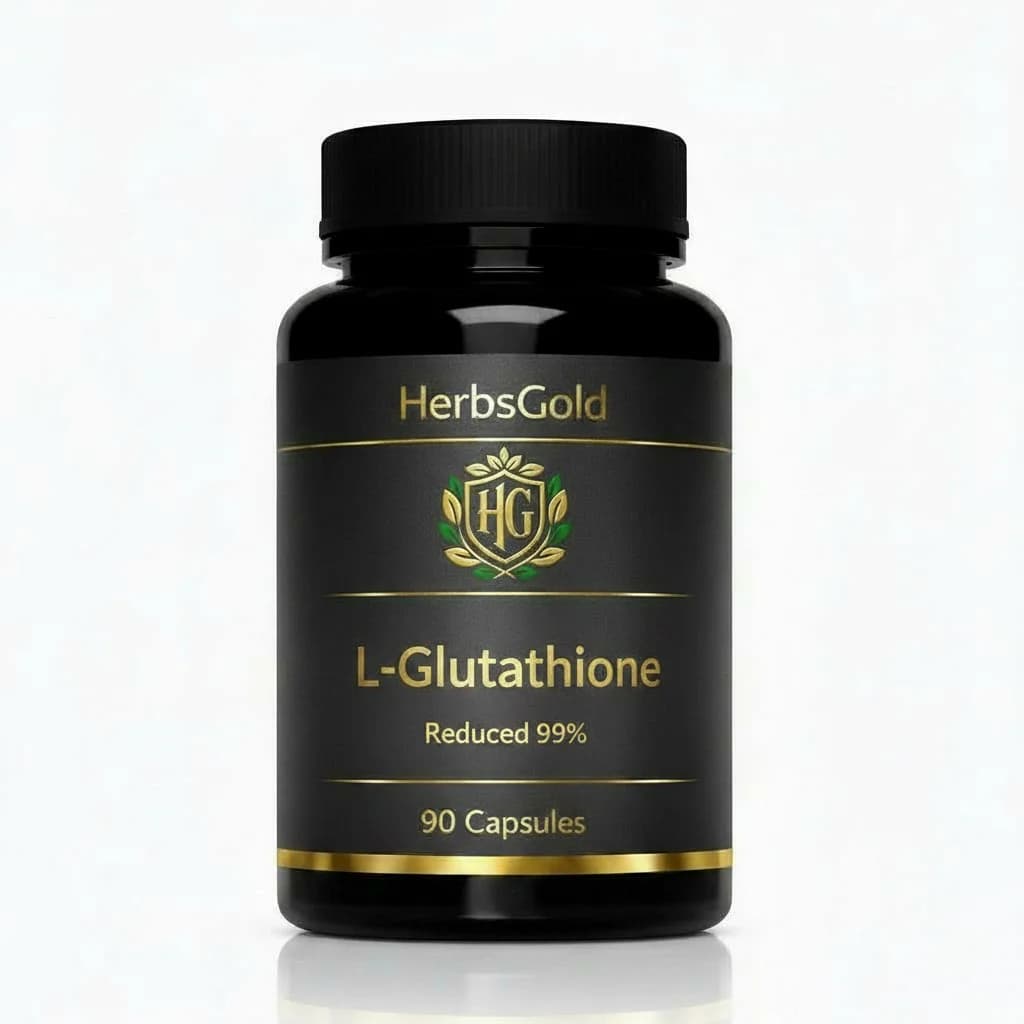
L-glutathione: “reduced” is part of the name, not decoration
Glutathione exists in two forms and the label usually says which. Together with a purity percentage, those are the two figures that make two packs comparable.
September 1, 2026
On a label, glutathione may be written as “L-glutathione reduced”, as “GSH”, or simply as “glutathione”. The difference is not stylistic.
The two forms
Glutathione exists in a reduced form (GSH) and an oxidised form (GSSG). These are two different chemical states of the same compound.
When a label says only “glutathione”, the form is not stated. When it says “reduced” or “GSH”, it is.
The figures
Essentials L-Glutathione contains 500 mg of reduced L-glutathione per daily dose of 1 capsule, at 99% purity.
At 99%, that is roughly 495 mg of the compound itself.
Glutathione doses vary considerably between products, and purity is rarely stated.
Why both figures matter
A dose without a form does not say what you bought. A form without a purity does not say how much of the weight is the compound.
The two together make one pack comparable with another — which is the entire purpose of a specification on a label.
What to look for on a label
- the dose in milligrams for the recommended daily intake
- the form — reduced / GSH, or oxidised / GSSG
- the purity percentage, if stated
- how many capsules make up the dose
If the form is missing, you know the weight but not the state of the compound.
What these figures do not say
Form and purity describe a raw material. They are not a statement of effect — food supplements do not treat or prevent disease; they complement a varied diet rather than replacing it.