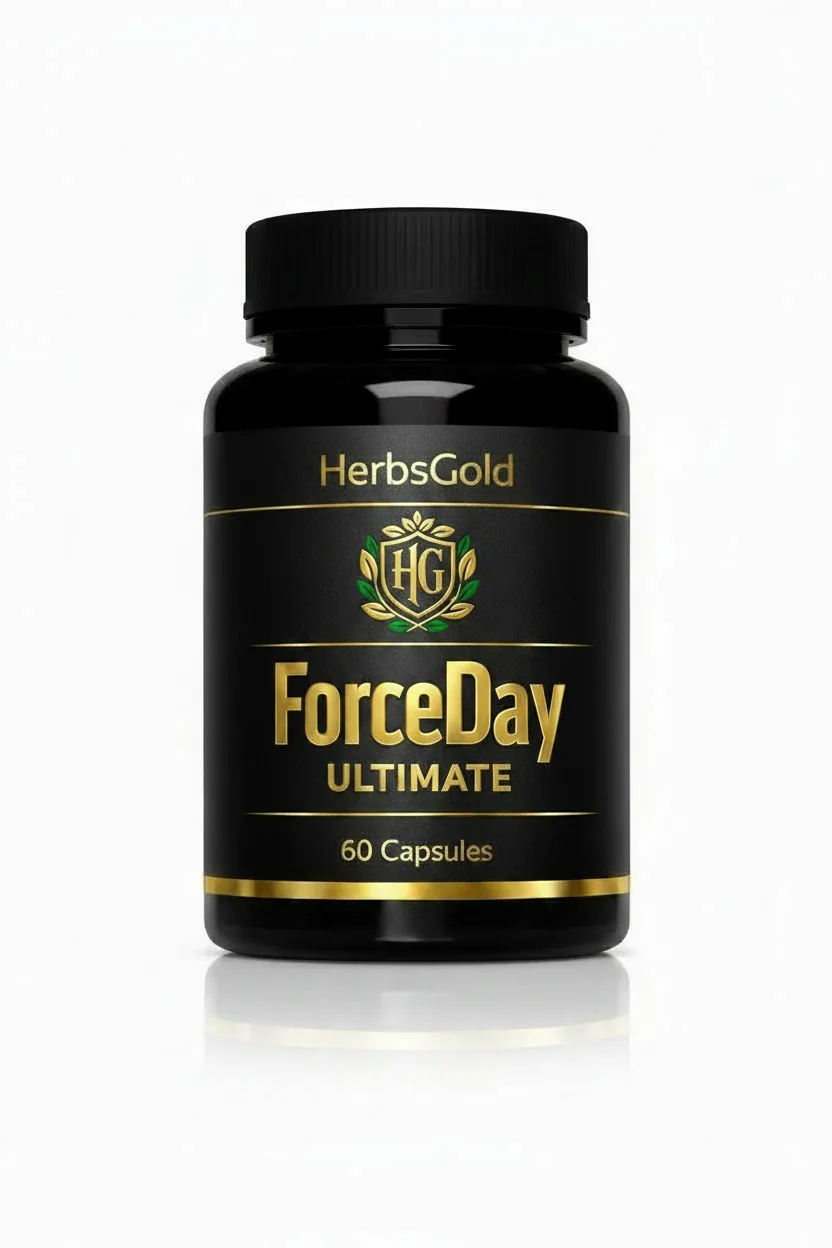
Tribulus: what “95% saponins” stands for
Tribulus extract is standardised by saponin content. Grades vary widely, and at the same label weight the difference in milligrams is several-fold.
September 1, 2026
Tribulus (Tribulus terrestris) is sold almost always as an extract, and that extract is described by a saponin percentage. That percentage is the figure which makes two packs comparable.
What the saponins are here
Saponins are a group of compounds present in the plant. They are the marker the extract is standardised against — the quantity a manufacturer measures and declares.
The percentage says how much of the extract's weight that group accounts for. It describes nothing else about its composition.
The figures
Tribulus extracts are sold across a wide range of standardisation grades. Ours is at 95% saponins.
ForceDay contains 380 mg of extract per recommended daily dose of 3 capsules. At 95% that is roughly 361 mg of saponins.
The same 380 mg of extract at 20% would give 76 mg. At 45%, 171 mg. The label weight is identical in all three cases.
Why the range is so wide
The higher the percentage, the more raw material and the longer the purification behind a gram of extract. Lower standardisations are therefore more common — they are cheaper to produce.
That does not make a 20% extract defective. It makes it a different product, one to be compared by content rather than by weight.
What to look for on a label
- the Latin name Tribulus terrestris and which part of the plant was used
- the extract weight in milligrams for the recommended daily dose
- the percentage, and that it refers to saponins specifically
- whether it says “extract”, or is milled herb
If the percentage is missing, two packs of equal weight are not comparable.
What the percentage does not say
Standardisation describes composition. It is not a statement of effect — food supplements do not treat or prevent disease; they complement a varied diet rather than replacing it.